Introduction
Choosing the right eCommerce platform is one of the most critical decisions for any online business. The platform you select will determine how your store functions, how easily you can manage it, and how well it can scale as your business grows.
With many options available, understanding the strengths and limitations of each platform helps you make a smart, long-term decision.
🛒 What Is an eCommerce Platform?
An eCommerce platform is a software solution that allows you to build, manage, and operate an online store. It provides tools for:
- Product management
- Payment processing
- Order handling
- Customer management
- Website design
🎯 Why Choosing the Right Platform Matters
The right platform can:
- Improve website performance
- Enhance user experience
- Increase conversions
- Support scalability
- Reduce operational complexity
The wrong choice can lead to technical issues, limitations, and higher long-term costs.
🔑 Types of eCommerce Platforms
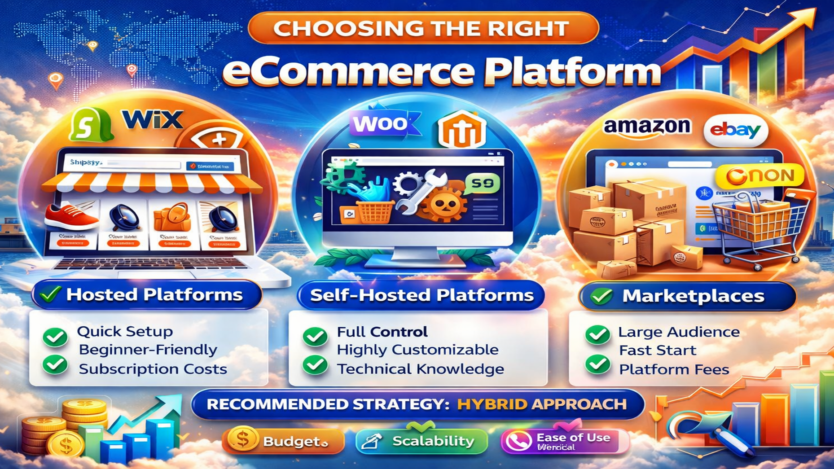
🌐 1. Hosted Platforms
These are all-in-one solutions where hosting and maintenance are handled for you.
Examples:
- Shopify
- Wix eCommerce
Pros:
✔ Easy to set up
✔ Beginner-friendly
✔ Built-in security
Cons:
✖ Limited customization
✖ Monthly subscription costs
⚙️ 2. Self-Hosted Platforms
These give you full control over your website and features.
Examples:
- WooCommerce (WordPress)
- Magento
Pros:
✔ High customization
✔ Full control
✔ Flexible integrations
Cons:
✖ Requires technical knowledge
✖ You manage hosting and security
🛍️ 3. Marketplace Platforms
Sell products on established marketplaces.
Examples:
- Amazon
- eBay
- Noon
Pros:
✔ Large customer base
✔ Quick setup
✔ Built-in trust
Cons:
✖ High competition
✖ Limited branding
✖ Platform fees
⚖️ Key Factors to Consider
💰 1. Budget
Consider:
- Setup costs
- Monthly fees
- Transaction fees
Choose a platform that fits your financial plan.
🧩 2. Ease of Use
If you are a beginner:
- Choose user-friendly platforms
- Look for drag-and-drop builders
⚙️ 3. Features & Functionality
Essential features include:
- Payment integration
- Inventory management
- SEO tools
- Mobile optimization
📈 4. Scalability
Ensure your platform can grow with your business:
- Handle more traffic
- Support more products
- Add advanced features
🎨 5. Design & Customization
Your store should reflect your brand:
- Custom themes
- Flexible layouts
- Branding options
🔐 6. Security
Security is crucial for customer trust:
- SSL certificates
- Secure payment gateways
- Data protection
🔍 7. SEO & Marketing Capabilities
Choose platforms that support:
- SEO optimization
- Marketing tools
- Analytics
🧠 Which Platform Should You Choose?
Choose Hosted Platforms if:
- You want quick setup
- You have limited technical knowledge
Choose Self-Hosted Platforms if:
- You want full control
- You plan long-term scalability
Choose Marketplaces if:
- You want immediate access to customers
- You are testing products
🚀 Recommended Strategy
The most effective approach is a hybrid model:
- Your own website → Branding & control
- Marketplaces → Additional reach
- Social media → Engagement & marketing
⚠️ Common Mistakes to Avoid
- Choosing based only on price
- Ignoring scalability
- Overlooking SEO features
- Selecting overly complex platforms
- Not planning long-term
📊 Quick Comparison
| Platform Type | Ease of Use | Customization | Cost | Scalability |
|---|---|---|---|---|
| Hosted | High | Medium | Medium | Medium |
| Self-Hosted | Medium | High | Variable | High |
| Marketplace | High | Low | Fees | Medium |
Conclusion
Choosing the right eCommerce platform is a strategic decision that impacts your business performance, growth, and customer experience. By carefully evaluating your needs, budget, and long-term goals, you can select a platform that supports your success.
Need Help Choosing the Right Platform?
At Tradepoint Digital, we help businesses:
- Select the best eCommerce platform
- Build and optimize online stores
- Integrate payment and automation systems
- Improve performance and conversions
👉 Get in touch today to build your online store the right way.