Introduction
Search Engine Optimization (SEO) is one of the most powerful strategies for driving consistent, high-quality traffic to an eCommerce website. Unlike paid ads, SEO focuses on organic visibility, helping your store appear in search results when customers are actively looking for products.
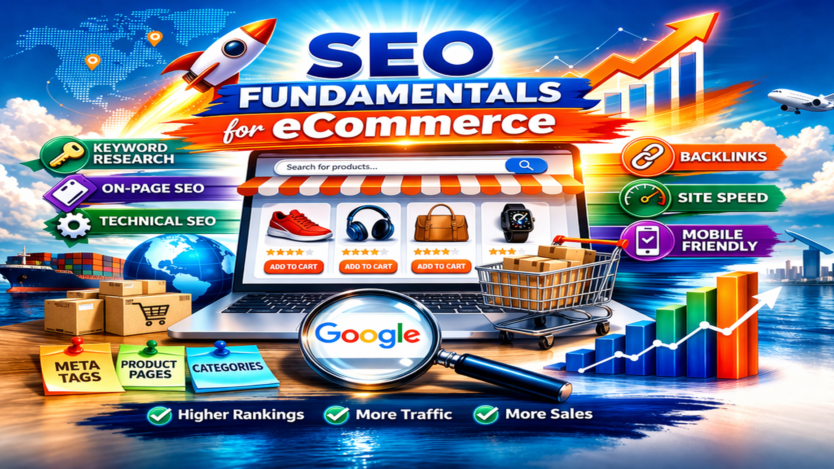
Understanding the fundamentals of eCommerce SEO is essential for increasing traffic, improving rankings, and boosting sales.
🔍 What Is eCommerce SEO?
eCommerce SEO is the process of optimizing an online store to improve its visibility in search engines like Google. It involves enhancing product pages, category pages, and overall website structure to rank higher for relevant search queries.
🎯 Why SEO Is Important for Online Stores
🚀 Increased Organic Traffic
Higher rankings bring more visitors without ongoing ad costs.
💰 Higher Conversion Rates
SEO attracts users with buying intent.
📈 Long-Term Growth
SEO continues to deliver results over time.
🏆 Competitive Advantage
Outrank competitors and capture more market share.
🔑 Core Components of eCommerce SEO
🏷️ 1. Keyword Research
Keyword research is the foundation of SEO.
Focus on:
- Product-specific keywords
- Long-tail keywords (e.g., “buy wireless headphones online”)
- Customer intent
📝 2. On-Page SEO
Optimizing individual pages is critical.
Key Elements:
- Product titles
- Meta titles & descriptions
- URLs
- Headings (H1, H2)
- Product descriptions
🛒 3. Product Page Optimization
Each product page should be optimized for both users and search engines.
Include:
- Unique content
- High-quality images with alt text
- Customer reviews
- Clear CTAs
⚙️ 4. Technical SEO
Technical performance affects rankings.
Important Factors:
- Website speed
- Mobile responsiveness
- Secure HTTPS
- Proper site architecture
🔗 5. Internal Linking
Internal links help search engines understand your website structure.
Examples:
- Linking related products
- Connecting blog posts to product pages
- Clear navigation menus
📊 6. Content Marketing
Content helps attract organic traffic.
Examples:
- Blog articles
- Buying guides
- Product comparisons
- FAQs
⭐ 7. User Experience (UX)
Search engines prioritize websites that offer a good experience.
Focus on:
- Easy navigation
- Fast loading speed
- Mobile-friendly design
- Simple checkout process
🔍 Understanding Search Intent
Types of Intent:
- Informational → “How to choose a laptop”
- Navigational → Brand-specific searches
- Transactional → “Buy laptop online”
For eCommerce, focus mainly on transactional keywords.
⚠️ Common SEO Mistakes to Avoid
- Duplicate product descriptions
- Ignoring mobile optimization
- Slow website speed
- Poor URL structure
- Missing meta tags
- Keyword stuffing
📈 Basic SEO Strategy for eCommerce
- Conduct keyword research
- Optimize product and category pages
- Improve website speed
- Add internal links
- Create valuable content
- Monitor performance using analytics
🛠️ Essential SEO Tools
- Google Search Console
- Google Analytics
- Keyword research tools
- SEO plugins (e.g., RankMath)
- Page speed optimization tools
🚀 Pro Tips for Better Rankings
- Focus on user intent, not just keywords
- Use structured data (schema markup)
- Optimize images for faster loading
- Build high-quality backlinks
- Regularly update your content
Conclusion
SEO is a critical component of eCommerce success. By understanding and applying SEO fundamentals, you can improve your store’s visibility, attract targeted traffic, and increase sales.
While SEO requires time and consistency, it delivers long-term, sustainable growth.
Need Help with eCommerce SEO?
At Tradepoint Digital, we help businesses:
- Optimize eCommerce websites
- Improve product page rankings
- Develop SEO strategies
- Increase organic traffic and sales
👉 Get in touch today to grow your online store with expert SEO solutions.